
8 people you should know about in adult social care
By Rachel Kelso, Founder of Homecare Voices
Eight members of Homecare Voices you should know about, each dedicated to doing right by others in the social care space, whilst navigating adversities of their own.
Elaine

When Elaine decided to enter semi-retirement, she would have preferred to do care in the community but instead went to a care home, rightly wishing to be paid for her full working time. Before making that leap, Elaine worked in homecare for five years during which time she single-handedly drove through improvements in holiday pay for her and her colleagues.
Now on part-time hours at a care home, Elaine volunteers her expertise at Homecare Voices, spear-heading a project looking into what steps are taken by local authorities to monitor the employment conditions at the homecare providers they contract out to. Elaine is also the architect of our mileage claim guide. In her own words, in homecare "there is so much smoke and mirrors, it's hard to know which way is up".
Maggie

Maggie was left with no choice but to leave the UK as a result of her experiences under the Health & Care Worker Visa, pulling her teenage children away from the stability of their lives in the UK.
Now free from threat back home in Kenya, Maggie is determined to share her story, knowing that migrant homecare workers who remain in the UK are simply unable to do so. Though sadly Homecare Voices went uncredited, we recently connected Maggie up with The Guardian for this article; the only organisation that knew a migrant care worker in a safe enough position to go 'on the record'.
Monika

Monika is the glue that holds our peer support network together. As a walker between care visits, the easiest way for Monika to stay in touch is by voice-noting as she builds her daily step count, come rain or shine, heatwave or ice.
Monika's voice has been a reassuring presence for members of our network almost every day of 2025. We are so grateful for this and for Monika's voluntary support, moderating our WhatsApp Community and staying in touch with members.
Nasrin*

Earlier this year, we unsuccessfully applied for grant funding from the Migration Exchange that would have seen Nasrin*, a migrant member of our community, employed to lead our advocacy on behalf of migrant homecare workers.
Through personal circumstance, this exceptionally talented individual was able to leave the constraints of the Health & Care Worker Visa behind, yet remain free to live and work in the UK.
In March, Nasrin accompanied me to meet the Minister for Employment Rights at the Department of Business and Trade. Together we spoke about: how unpaid gaps in homecare continue to degrade workers' hourly rate of pay, sometimes to below National Minimum Wage; how a lack of oversight around unpaid gaps is subjecting migrant homecare workers to exploitative working hours, and is at the heart of why the sector cannot hold onto its domestic workers. That meeting took courage, and our case was strengthened enormously by Nasrin's professionalism and sharp-thinking.
*Not their real name.
Julie
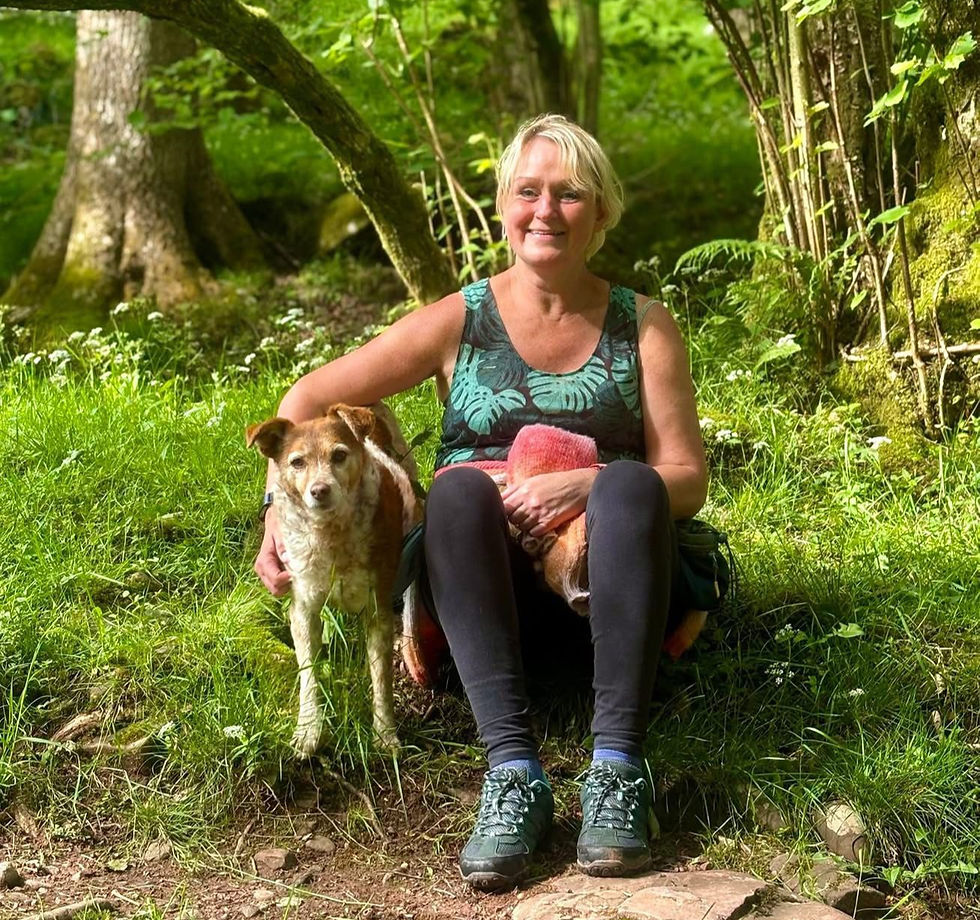
Julie is the original powerhouse, though the first to admit that she can be her own worst enemy. In speaking up about injustices at work, Julie has unintentionally - and on more than one occasion - exposed how zero-hours contracts may be weaponised to silence homecare workers.
Also, how hard it can be to access trade union representation if considered to be legally classed as a 'worker' rather than an 'employee'. Note: plans to remove that distinction never made it into the newly passed Employment Rights Bill.
Every movement needs a few Julies, and we wish her every success in getting the stunning book she has been writing about homecare, published.
Amaka

Amaka is about as well-networked as it is possible for a direct care worker to become, thanks to her determination to turn difficult experiences into a force for good.
Despite having unprecedented connections with leaders in the adult social care sector, Amaka - like so many of our migrant colleagues - was unable to find an employer to sponsor her when her Certificate of Sponsorship expired. Now in Nigeria, Amaka remains as passionate and involved as ever.
Ola

Alongside being an vocal advocate for patient, person-centred care and support, Ola set up an online petition calling for migrant care workers to be allowed to work for any care provider in February 2024, before a campaign led by Unison began calling for a Certificate of Common Sponsorship. These days, Ola works in a care home having successfully found a sponsor switch out of homecare early on.
Ola recognises that the government reserves the right to make what is deemed as the best interest decision for the country, but encourages migrant members of our community to level up if they can and - if not - have a plan B in place. This is entirely understandable given recent developments from the Home Office, which is proposing to retrospectively triple the time migrant care workers must wait before being able to apply for Indefinite Leave to Remain, all the while enduring often exploitative working arrangements. This proposal has left Ola and many other incredibly hard working people feeling betrayed.
Kyly

Kyly has championed Homecare Voices' potential to change perceptions of care work for the better from day one, and it was her idea to hold 'positive Fridays' in our peer support network. This simple yet powerful initiative has been instrumental in keeping our community from entering into a doom-loop, offering hope, humour and a regular reminder of why we do what we do.
To support our not-for-profit, free-to-join peer support network and advocacy body run by and for current and former homecare workers throughout the UK, join, donate to or work with Homecare Voices.


Comments